Are you a mold inspector?
MoldRegistry lists 745 mold inspectors. A free listing gives you a profile page and quote requests from people looking for mold inspection near you, sent straight to your inbox.
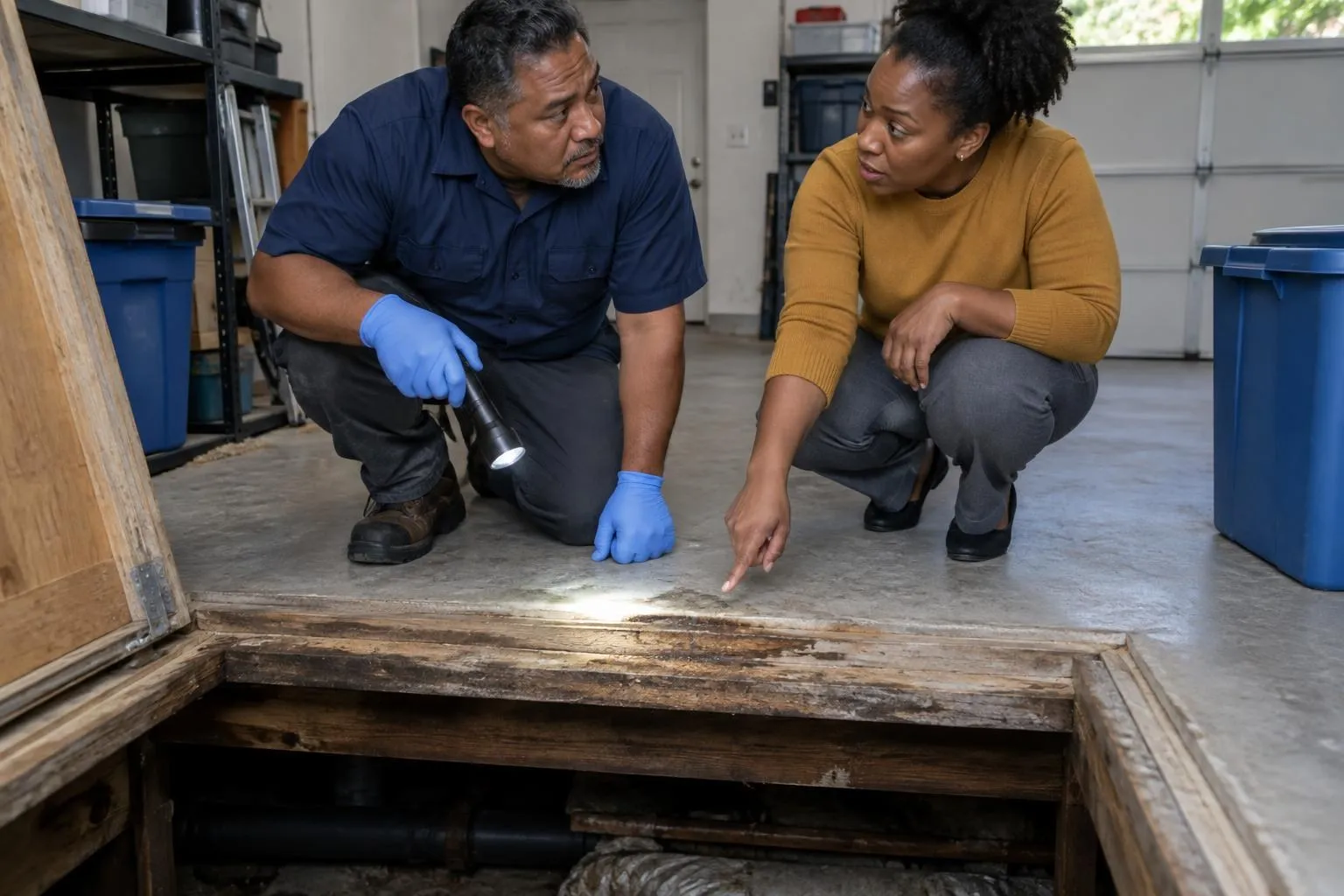
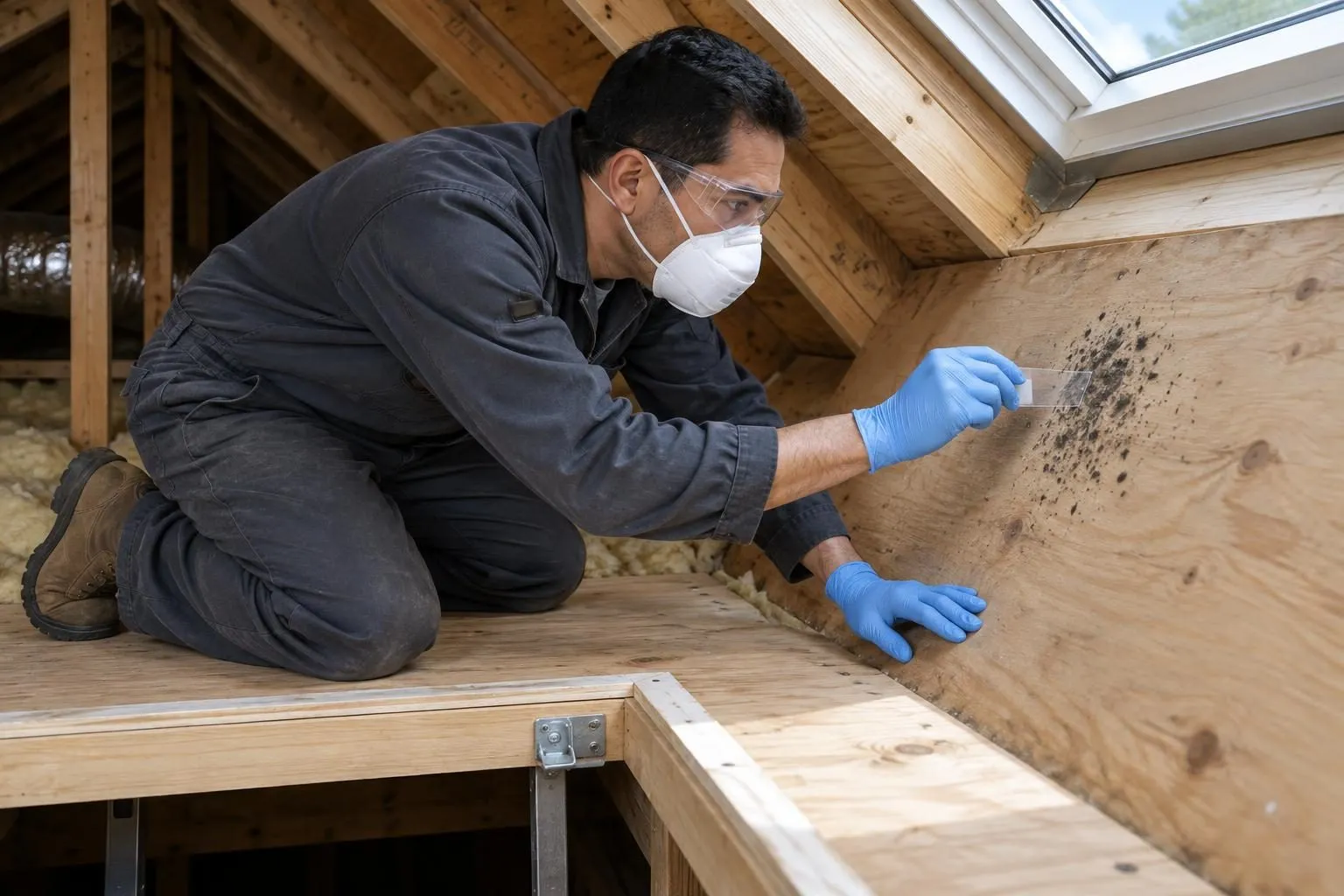
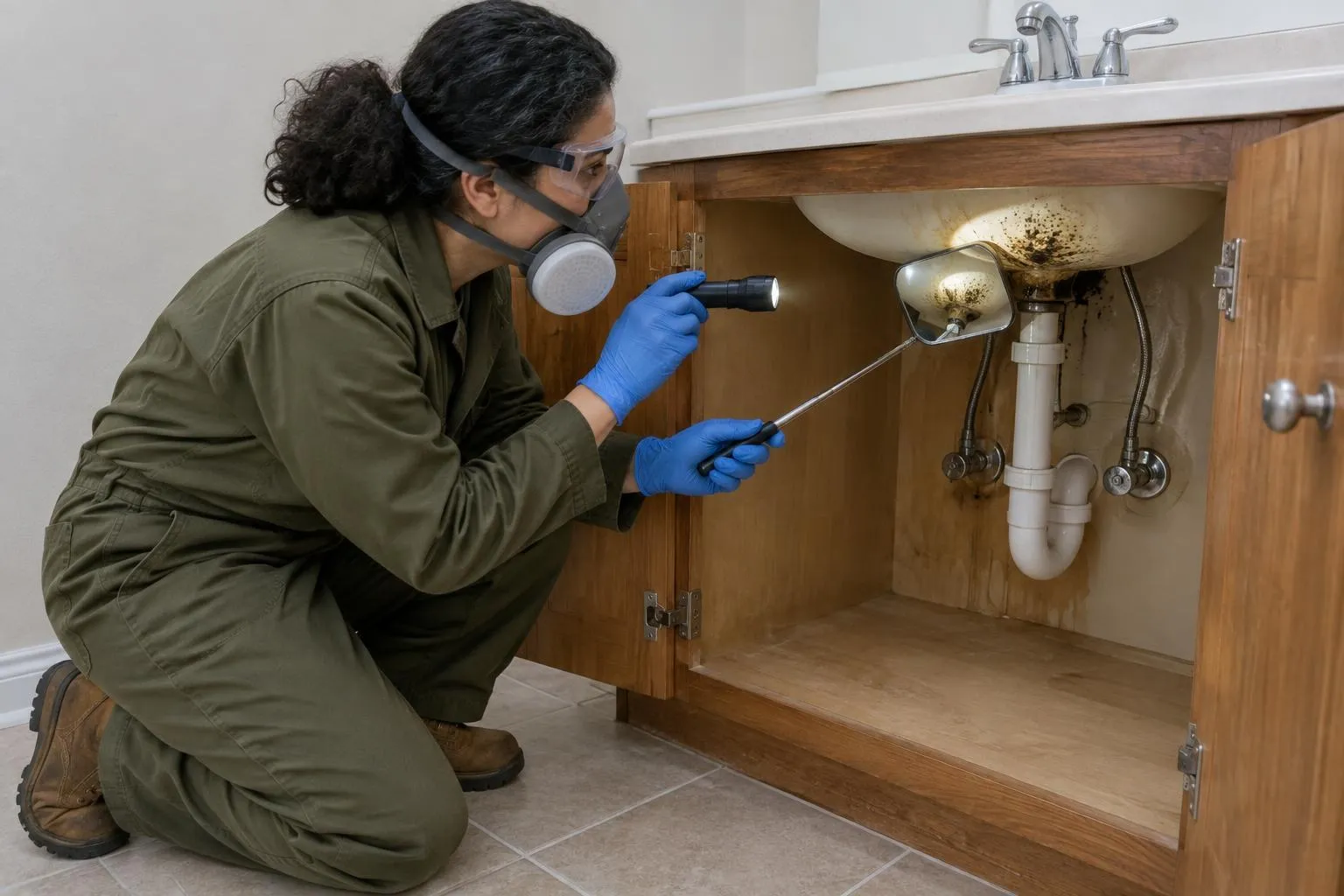
I hired a mold inspector once who showed up with a laminated certificate from an online course he’d completed over a weekend. Two hours later, he’d missed visible mold behind the bathroom vanity, water stains in the attic, and had no idea how to interpret lab results. When I asked about his experience, he mentioned he’d been doing inspections for about four months.
That’s when I learned the hard way: not all certifications are created equal. And the mold inspection world has more alphabet soup than most industries—some letters mean something real, and others are basically participation trophies.
Let me be honest upfront: a CMI certification matters if it’s the right one, but it’s absolutely meaningless if it’s not. There are legitimate, rigorous certifications that actually verify competence. And then there are courses you can finish in a weekend from your couch. This article breaks down which is which, what the real credential actually requires, and when spending money on a “certified” inspector is worth it.
The Short Version:The ACAC CMI is the only mold inspector certification that’s actually hard to get (2+ years experience required, rigorous exam, board approval). Everything else is entry-level training. For hiring an inspector, demand the ACAC version plus documented field experience—the credential matters less than the hours logged.
Key Takeaways
- The ACAC CMI (Council-certified Microbial Investigator) is the rigorous one—requires 2+ years verified field experience, a grueling exam, unanimous board approval, and ongoing professional development. Most inspectors don’t have it.
- The cheap certifications (InterNACHI, MICRO CMI) require no experience and minimal study—useful for baseline knowledge, but they don’t prove competence in the field.
- Certification alone tells you nothing about quality—verify field experience, ask for case studies, check for CESB accreditation. A certificate on the wall isn’t the same as someone who’s actually done the work.
- The financial and time commitment for a real CMI is substantial, but if you’re hiring an inspector, you want evidence they can actually do the job—not just that they paid for a course.
The Certification Landscape Is Weirdly Messy
Here’s what nobody tells you: the mold inspection industry has almost no barrier to entry. Unlike structural engineers, electricians, or even home inspectors in many states, you can legally call yourself a “certified mold inspector” in most places after completing an online course.
This creates a wild situation where “CMI” can mean three totally different things:
| Certification | Who Issues It | Experience Required | Time Investment | Rigor Level |
|---|---|---|---|---|
| ACAC CMI (Certified Microbial Investigator) | American Council for Accredited Certification (CESB-accredited) | 2+ years field experience (1 year with science degree) | Exam-based, board approval required | High — only elite candidates pass |
| MICRO CMI | MICRO Credentials (nationally recognized) | None | Online exam + project submission | Medium — more accessible, still requires work |
| InterNACHI CMI | InterNACHI (home inspector trade org) | None | Free online courses with membership | Low — entry-level knowledge only |
The ACAC credential sits in a completely different league. It’s based on broad industry knowledge, not a trainable curriculum. It requires unanimous board approval. You have to prove you’ve actually spent years sampling mold, interpreting lab results, designing remediation, and dealing with real buildings.
Reality Check:The mold inspector who missed mold in my bathroom almost certainly had the InterNACHI or MICRO version. He had a credential. He had zero field experience. Those certifications aren’t worthless—they’re just not proof of competence in the field.
What the Real CMI Actually Requires
The ACAC CMI is accredited by the Council of Engineering and Scientific Specialty Boards (CESB)—the same body that certifies Industrial Hygienists. That matters. It means there’s an actual standard.
Here’s what you need to get it:
Experience: 2–8 years of documented field experience in microbial sampling, mold inspection, or testing. If you have a science or engineering degree, you can knock it down to 1 year. This is non-negotiable.
The Exam: It’s not a quiz on a course you took. It’s based on broad knowledge of bioaerosols, health effects, sampling procedures, lab result interpretation, and remediation protocol design. You can’t cram your way through it.
Board Approval: Even if you pass the exam, you need unanimous approval from the certification board. This is where a lot of solid candidates get filtered out.
Recertification: Every 2 years, you need 20 hours of professional development per year (40 hours total). You can’t get it and coast.
Most mold inspectors don’t have this credential. Industry estimates suggest only a small percentage of inspectors achieve the top designations. That’s not gatekeeping—that’s because it’s genuinely difficult to qualify.
Pro Tip:If you’re hiring an inspector, ask specifically for the ACAC CMI, not just “CMI.” Then ask them to walk you through their actual field experience—how many inspections, what types of buildings, what they’ve seen go wrong. The credential is the starting point, not the finish line.
The Cost (And What It Actually Buys)
Here’s where the research gets frustratingly vague: the ACAC doesn’t publicly list exam fees or application costs. But we can infer the real price from what professionals spend:
Direct costs: Exam and application fees (likely $300–$500+ range, based on similar CESB programs), plus prep coursework if you’re not already fluent in the subject.
The actual cost: 2+ years of full-time or part-time field work. If you’re starting from scratch, you’re looking at years before you’re even eligible to sit for the exam.
By contrast, the cheap certifications cost almost nothing: InterNACHI’s mold course is free with membership (~$50/year). MICRO CMI is online exam plus a project—accessible to someone with zero experience.
Reality Check:The low-cost credentials aren’t scams. They teach real concepts. But they’re a starting point, not proof of competence. It’s the difference between reading a cookbook and running a restaurant.
When the CMI Certification Actually Matters
You’re hiring an inspector for a serious situation. Water damage, visible mold in a home you’re buying, respiratory symptoms in your family—this is when you want someone with deep experience. The ACAC CMI signals they’ve logged the hours.
You’re working with remediation companies. They need to know their inspector can interpret lab results, understand why certain areas need treatment, and design protocols that actually work. A weekend-course certification won’t cut it.
You’re in litigation or a complex commercial project. If a report might end up in court or if the stakes are high (office building, hospital, school), the ACAC credential is basically table stakes. Insurance companies and attorneys will expect it.
You’re building a reputation as a serious professional. If you’re an inspector and you want to stand out from the sea of cheap competitors, the ACAC CMI is the way to do it.
When It Doesn’t Really Matter (And You’re Probably Overthinking It)
You hired someone who has the cheaper certification but extensive real experience. Experience beats credentials. A person with 10 years in the field and a MICRO CMI is almost certainly more useful than someone with an ACAC and 2 years on the job.
You’re doing a basic pre-purchase inspection on a residential property. If there’s no visible mold, no water damage history, and no health symptoms, a competent inspector with solid baseline knowledge is fine. The overkill option exists, but it’s overkill.
You’re just trying to understand your own building. If you want an inspection to figure out why your basement smells musty, you don’t need the elite credential. You need someone who knows how to look and isn’t going to miss obvious problems.
Reality Check:Certification is one signal. The real questions are: How many inspections have they actually done? What do their reports look like? Can they explain what they found in plain English? Will they stand behind their work?
The Uncomfortable Truth About Certification Culture
Here’s what most guides won’t tell you: certification creates the illusion of quality control where almost none exists.
A person can have the ACAC CMI and still provide a lazy report. A person can have zero official credentials and be meticulous. The credential is a floor, not a ceiling.
The mold inspection field has let this happen because there’s no standardized licensing in most states. Unlike electricians, who need a state license, mold inspectors operate in a certification free-for-all. So the industry created its own standards (ACAC, MICRO, etc.) to try to separate wheat from chaff.
It mostly works. But it only works if you actually verify the credentials and ask the hard questions.
Practical Bottom Line
If you’re hiring an inspector:
- Ask for the ACAC CMI specifically. If they don’t have it, ask why and what their alternative credentials are.
- Verify the claim (ACAC maintains a directory).
- Ask for references and examples of past work.
- Get clarity on their scope—inspection only? Lab result interpretation? Remediation design?
- Don’t assume a credential means they’re competent. Use it as a filter, then dig deeper.
If you’re an inspector pursuing the credential:
- The ACAC CMI is worth the effort if you’re building a serious practice. It’s not a quick certification—it’s a verification that you’ve done the work.
- Start with MICRO CMI or CRMI if you’re early in your career. Build experience first.
- Track your field experience documentation obsessively. You’ll need it to apply.
The real lesson:
Certification matters when it’s backed by experience requirements and real standards. It doesn’t matter when it’s a weekend course with a nice certificate. The hard part isn’t knowing which is which—it’s being willing to ask the uncomfortable questions instead of taking the credential at face value.
Want the full picture? Check out our Complete Guide to Mold Inspectors for what actually makes a good inspector, beyond credentials. And if you’re dealing with a specific situation, we’ve got guides on mold inspection costs and what to expect in a report.
Done reading? Get quotes from mold inspectors near you.
Takes about a minute. Free, no obligation; providers reply to you directly.
Popular cities:
Nick built this directory to help homeowners find credentialed mold inspectors without wading through contractors who mostly want to sell remediation — a conflict of interest he ran into when trying to assess his own home after a plumbing leak.