Get free quotes from mold inspection near you
Takes about a minute. Free, no obligation; providers reply to you directly.
I watched a mold inspector pull out a $3,200 infrared camera to scan a basement wall, spend forty minutes collecting air samples with meticulous precision, and then… hand me a report written in Comic Sans on a form he’d been using since 2009.
The gear was pristine. The process was a mess.
That moment stuck with me because it perfectly captures the equipment paradox in mold inspection: professionals obsess over having the right tools while often overlooking whether those tools are being deployed with any real system. The industry has convinced inspectors (and homeowners) that buying expensive hardware is the path to better results. It’s not. At least, not by itself.
Here’s what actually separates competent inspectors from the rest: knowing which equipment genuinely matters for quality, which tools are overpriced marketing, and—this is the critical part—how to integrate them into a real workflow instead of treating them like props.
The Short Version
Moisture meters, air sampling pumps, and borescopes form the foundation of legitimate mold inspection. Infrared cameras are valuable but overrated for hidden mold detection. Software that tracks findings in real-time matters more than any single hardware purchase. Expensive gear covers up bad technique; it never replaces it.
Key Takeaways
- Hardware basics (moisture meters, sampling pumps, borescopes) cost $2,000–$5,000 combined and are non-negotiable for credible work
- Infrared cameras detect temperature differences but won’t identify mold; they’re a supporting tool, not a magic bullet
- AI-powered lab software like InstaLab™ reduces turnaround time from days to hours, but only works with proper sampling
- Cloud-based inspection apps (SafetyCulture, Xenia, Fast Mold Testing) prevent the most common failure point: inconsistent documentation and lost data
What Actually Matters: The Foundation Gear
Let me break down the equipment that separates professionals from hobbyists, and why.
Moisture Meters ($300–$800)
A quality moisture meter isn’t optional—it’s your baseline evidence that mold conditions exist. You’re measuring moisture content in wood, concrete, and drywall because mold needs water to grow. Without this data, your entire inspection is anecdotal.
Look for meters that:
- Read 5–40% moisture range (covers most building materials)
- Provide both pin and pinless options (pinless for non-invasive surface checks; pin for depth verification)
- Display readings in real-time on a backlit screen
Reality Check: A meter that costs $200 does the same job as one costing $700. Calibration matters more than brand prestige. Check it monthly against known moisture standards.
Air Sampling Pumps ($800–$2,000)
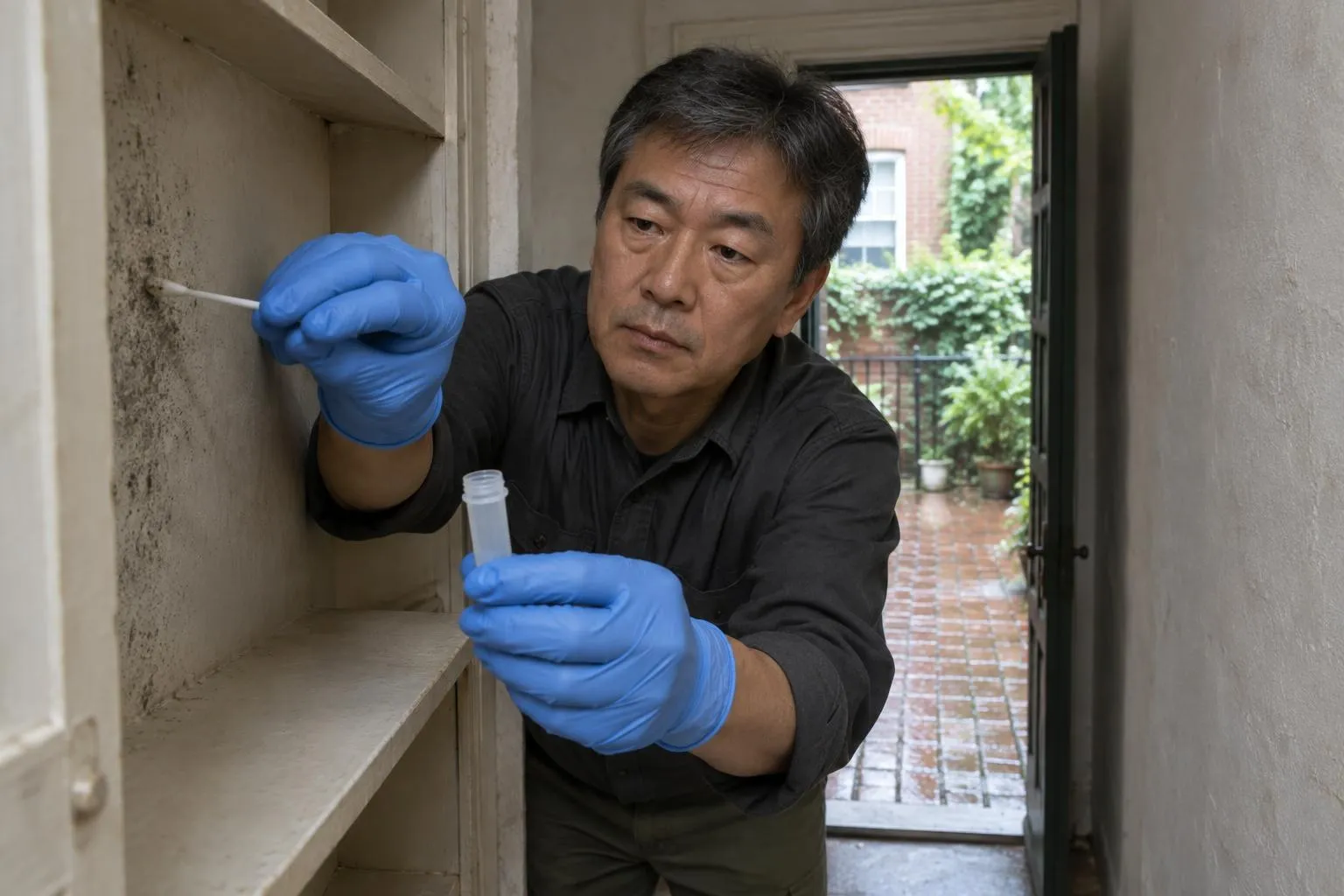
This is where the actual mold testing happens. The pump collects spores from air into a collection device (usually a cassette), which gets sent to a lab for analysis. Without this, you can’t quantify whether a space has elevated mold spore levels.
What matters:
- Flow rate consistency (typically 15–20 liters per minute)
- Battery life for full inspections (minimum 8 hours)
- Ability to hold pressure steadily (drift invalidates results)
Pro Tip: Most inspectors buy one pump and use it for every job. That’s a mistake. Buy two—one for baseline outdoor air samples, one for interior. This eliminates cross-contamination and strengthens your comparison data.
Borescopes with Cameras ($400–$1,200)
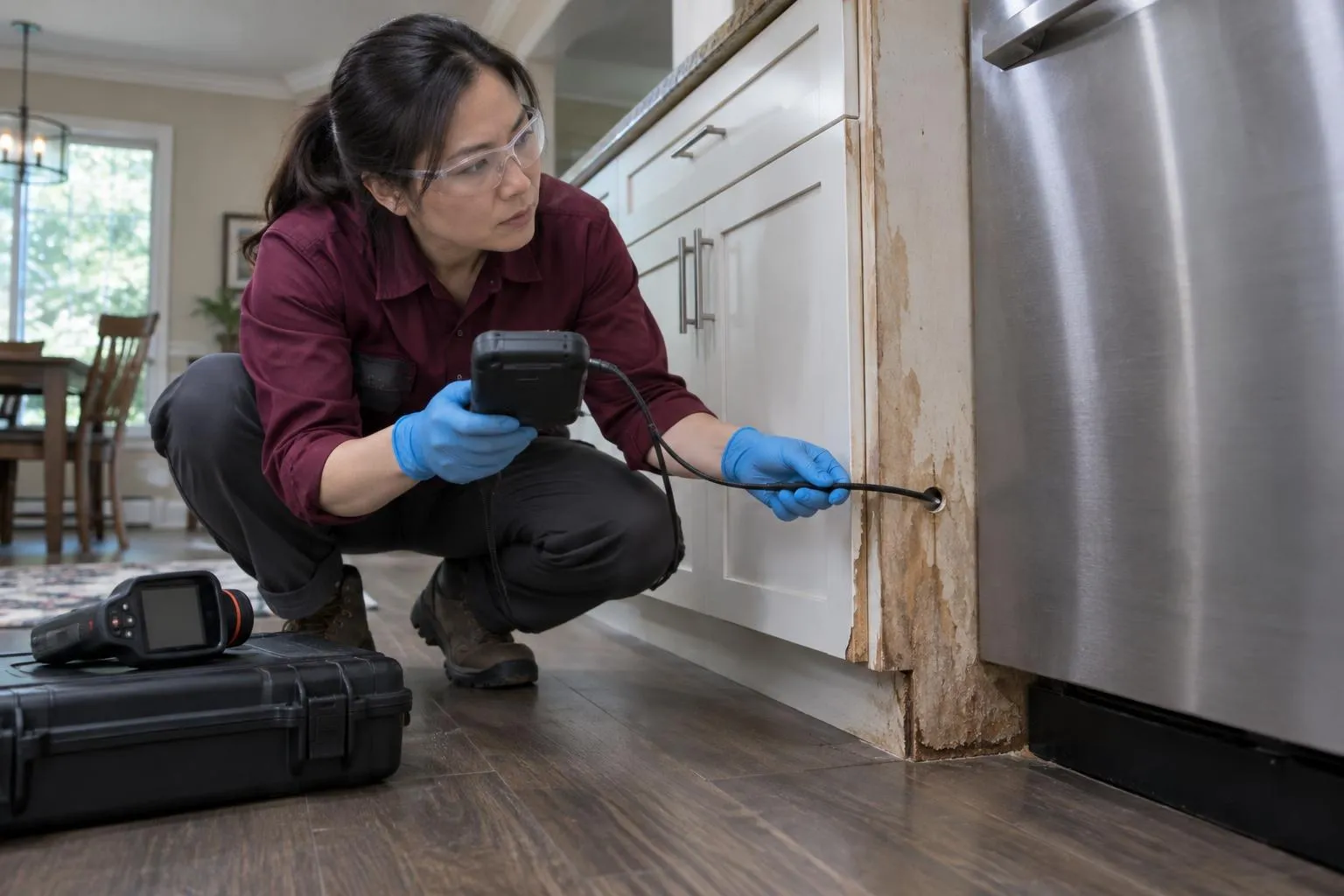
A borescope lets you see into walls, crawl spaces, and attics without cutting holes. You’re looking for visible mold, water staining, or conditions that promote growth. The camera captures stills and video for your report.
The spec that actually matters: image resolution of at least 1080p, and a cable long enough for your typical inspection (usually 3–6 meters). Anything less makes it hard to document what you’re seeing.
Thermometers and Hygrometers ($150–$400)
These measure temperature and humidity—the environmental conditions that either promote or inhibit mold growth. A humid, warm space is a mold factory. You need this data to explain why mold appeared somewhere specific.
Digital psychrometers that log data over time are worth the upgrade cost; they create a record that strengthens your report.
Where the Hype Lives: Infrared Cameras
Here’s the uncomfortable truth: infrared cameras are the gear world’s equivalent of expensive cologne. They look impressive. They feel professional. They’re also oversold.
An infrared (thermal imaging) camera detects temperature variations. Mold may show up as a slightly brighter spot because it emits more infrared energy than surrounding materials—but that’s not a reliable identification method. You’re seeing a temperature difference, not proof of mold.
Reality Check: An infrared camera costs $2,000–$5,000 new. It can help you identify areas to sample, but it won’t tell you if mold is actually present. Without air samples or swabs, the thermal image is theater.
That said: they do have a legitimate use. If you’re trying to find hidden moisture behind walls or locate the edges of water damage, an IR camera paired with a borescope gives you a clearer picture. But treat it as a secondary tool for locating where to sample, not as a replacement for sampling.
The Actual Game-Changer: Software and Workflow
Here’s what most articles miss: the equipment that moved the needle most in professional mold inspection wasn’t hardware—it was software integration.
Real-time Data Capture and Cloud Reporting
Tools like Fast Mold Testing, SafetyCulture, and Xenia let you:
- Photograph findings in-field with GPS timestamps
- Log temperature, humidity, and moisture readings automatically
- Build professional reports while still on-site (or within hours)
- Integrate air sampling data with visual documentation
Mold Busters, a major Canadian inspection firm, shifted from a decade-long reliance on viable lab testing (which takes 5–7 days) to InstaLab™ AI software. The AI uses machine learning to identify common toxigenic molds like Stachybotrys and Aspergillus from image recognition of color, cell structure, and hyphae—reducing lab wait times from days to hours.
This isn’t magic. It still requires proper sampling technique. But it eliminates the bottleneck that used to kill inspector productivity.
The Missing Link: Most inspectors still own great hardware but use bad processes. They collect data on paper, take photos with inconsistent lighting, and lose critical measurements between the field and the report. Cloud software solves this—and costs way less than new hardware.
Comparison Table: Essential vs. Overrated Gear
| Equipment | Cost Range | Essential? | Actual Impact on Quality | Hype Level |
|---|---|---|---|---|
| Moisture Meter | $300–$800 | ✅ Yes | Proves water conditions exist | Low |
| Air Sampling Pump | $800–$2,000 | ✅ Yes | Quantifies mold spore levels | Low |
| Borescope Camera | $400–$1,200 | ✅ Yes | Documents hidden growth | Low |
| Infrared Camera | $2,000–$5,000 | ⚠️ Conditional | Helps locate areas to sample; not identification | High |
| Cloud Inspection App | $50–$200/month | ✅ Yes | Prevents data loss, speeds reporting | Low (underrated) |
| AI Lab Software (InstaLab) | Subscription | ✅ Yes | Cuts lab turnaround 70% | Medium |
| Professional Lab Partnership | Variable | ✅ Yes | Validates findings; provides liability cover | Critical |
The Uncomfortable Truth About Technique
I’ve seen inspectors with $8,000 in equipment produce garbage reports because they:
- Collected air samples for 2 minutes instead of the standard 15–20 (invalidates the test)
- Took photos with backlighting, making it impossible to ID mold color
- Skipped humidity logging, so they couldn’t explain why mold appeared
- Used software sporadically, losing critical measurements between jobs
Pro Tip: A competent inspector with $3,000 in gear and a documented process beats a well-equipped technician with no system every time. Spend money on training and process design before you buy the second infrared camera.
Practical Bottom Line
If you’re buying mold inspection equipment today, here’s your roadmap:
Start here ($2,500–$3,500):
- One quality moisture meter
- One air sampling pump with cassettes
- One borescope with at least 1080p resolution
- Basic thermometer/hygrometer combo
- Free or low-cost cloud app (SafetyCulture, Xenia basic tier)
Add next ($2,000–$3,000):
- Second moisture meter for backup
- Subscription to specialized inspection software (Fast Mold Testing or equivalent)
- Partnership with a lab that offers AI-accelerated analysis
- Professional training on sampling technique (not optional)
Only after that:
- Infrared camera (if you consistently need to locate hidden moisture)
- Premium software suites with full remediation tracking
Want the full picture? Check out the Complete Guide to Mold Inspectors for context on credentialing, when to call a professional, and what a real inspection report should contain.
Done reading? Get quotes from mold inspectors near you.
Takes about a minute. Free, no obligation; providers reply to you directly.
Popular cities:
Nick built this directory to help homeowners find credentialed mold inspectors without wading through contractors who mostly want to sell remediation — a conflict of interest he ran into when trying to assess his own home after a plumbing leak.