Get free quotes from mold inspection near you
Takes about a minute. Free, no obligation; providers reply to you directly.
I got a call from a friend last year who’d just found black spots in her basement after a pipe burst. She’d already called three contractors — one quoted $8,000 to “rip out and replace,” another said “it’s probably nothing,” and a third told her to wait and see. None of them actually knew what they were looking at. That’s when she hired a mold inspector, who spent two hours methodically checking every inch of her foundation, took three samples to a lab, and sent her a report that actually answered her questions instead of upselling her into panic.
Turns out, that inspector did something most homeowners don’t realize exists: they separated the diagnosis from the sales pitch.
The Short Version:A mold inspector performs a non-invasive visual examination of your property, uses specialized equipment to detect moisture and hidden growth, collects samples sent to third-party labs, and delivers a report with findings and remediation recommendations — without selling you remediation work. The whole process typically takes 2-4 hours and costs varies by region, though lab analysis is usually bundled in.
Key Takeaways
- Licensed inspectors are trained to identify mold types, causes, and health risks — your untrained eye can’t reliably distinguish mold from other stains or understand what’s actually dangerous
- They use non-invasive methods and specialized gear to avoid spreading airborne spores and find hidden growth behind walls and in crawlspaces
- Their report is a diagnosis, not a sales tool — they won’t profit from recommending remediation, which keeps their findings objective
- No national EPA standard exists, so credentials and state licensing vary dramatically; verify your inspector’s certifications before booking
Here’s What Most People Miss
The mold inspection industry doesn’t have a single national certification. That’s actually the core problem. Florida requires 2 years of hands-on experience plus an exam through the Department of Business and Professional Regulation. Nevada might require something completely different. Wyoming might require nothing. This regulatory gap means a guy with a moisture meter and YouTube videos can call himself an inspector in some places.
When you hire a credentialed mold inspector — someone with a Certified Mold Inspector (CMI) designation from the Indoor Air Quality Association (IAQA) or Environmental Assessment Association (EAA) — you’re hiring someone who’s documented their training, passed an exam, and agreed to follow industry standards. That matters, because mold inspection done wrong doesn’t just give you bad information; it can spread spores throughout your home.
What Actually Happens During an Inspection (From Start to Finish)
The Pre-Inspection Call
Before your inspector shows up, they’ll ask you to prepare the house in a very specific way:
- Close all windows for at least 48 hours before the appointment
- Turn off the HVAC system completely
- Don’t clean or disturb suspected mold areas
This isn’t busy work. Open windows let in outside air that skews indoor air samples. Running the HVAC circulates particles and masks where contamination is actually coming from. Recent cleaning removes spores from surfaces right before sampling, which makes the problem look smaller than it is.
Pro Tip:If you’ve noticed a musty smell or water stain, photograph it and note when it appeared. This timeline helps your inspector understand whether this is fresh moisture (yesterday’s leak) or chronic damp (a ventilation problem for months).
The Visual Walkthrough
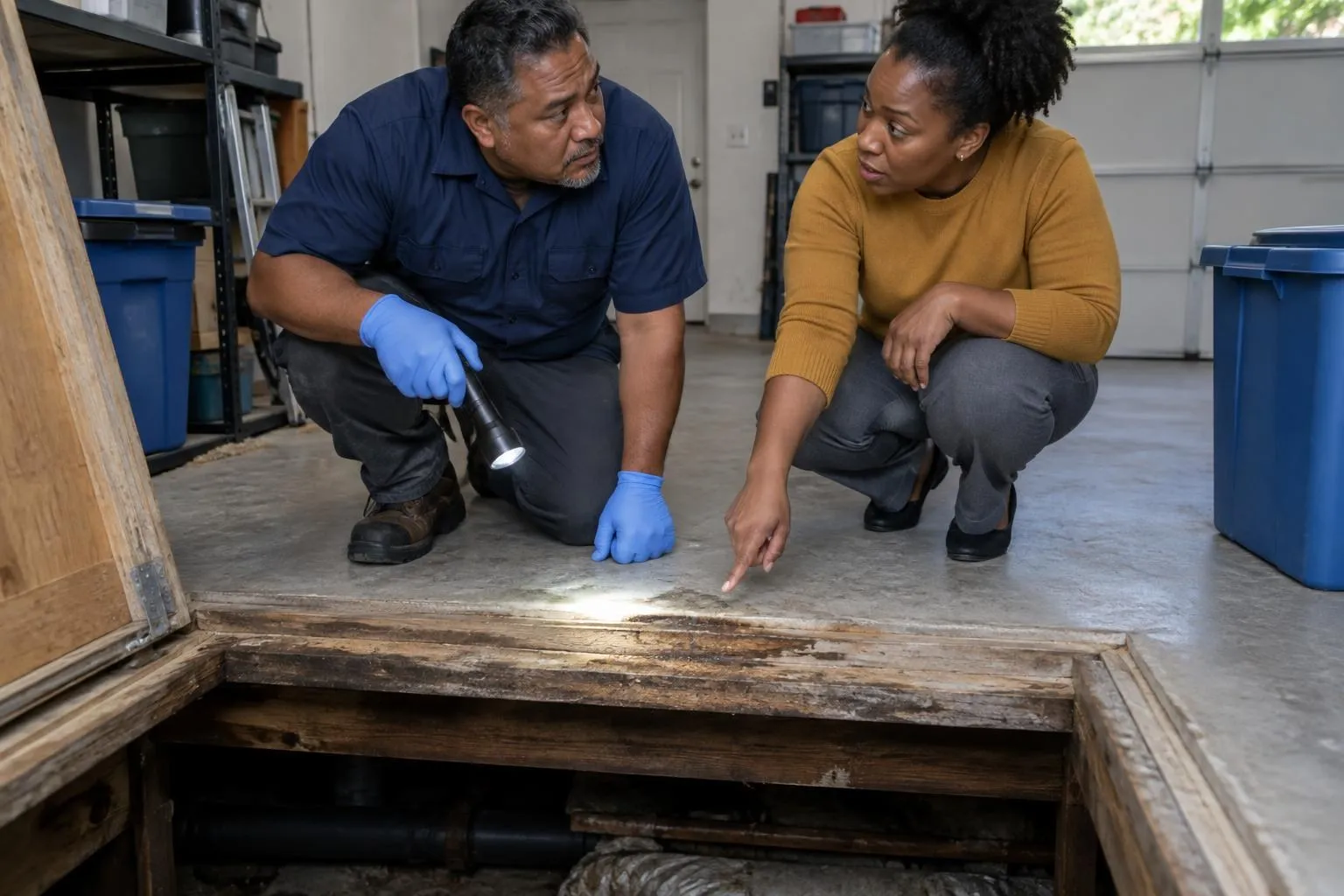
This is where the meat of the inspection happens. Your inspector won’t use a checklist — they’ll use their training to systematically examine the entire building envelope and interior systems for conducive conditions. That means anywhere moisture can accumulate and mold can grow.
They’re looking at:
| Area | What They Check | Why It Matters |
|---|---|---|
| Foundation & Basement | Cracks, seepage, standing water, efflorescence (white mineral deposits) | Water intrusion is mold’s primary food source |
| Crawlspaces | Vapor barriers, standing water, ventilation, insulation conditions | Often the dampest part of a home; moisture travels upward into walls |
| Attic | Roof leaks, condensation, ventilation adequacy, water stains | Hidden roof leaks can grow mold for months before visible inside |
| HVAC System | Ductwork condensation, filter conditions, coil cleanliness | Systems recirculate mold spores throughout the home if contaminated |
| Walls & Ceilings | Water stains, discoloration, soft spots (indicating past leaks) | Mold often grows behind finished surfaces where you can’t see it |
| Bathrooms & Kitchen | Ventilation function, grout condition, caulk failures | High-moisture areas are mold hotspots if humidity isn’t vented outside |
| Exterior | Grading, gutters, downspout discharge, foundation cracks | Poor water management outside leads to moisture inside |
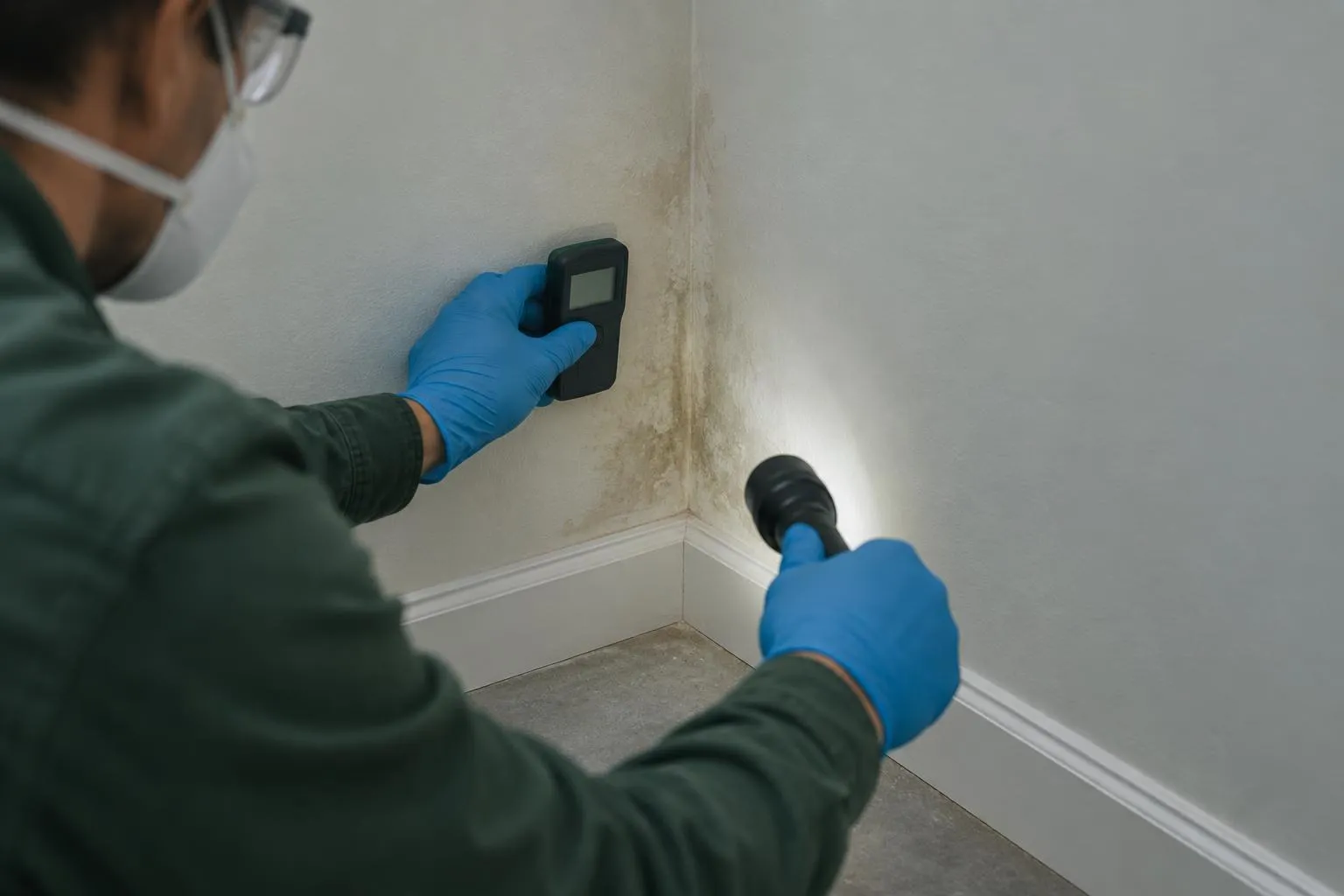
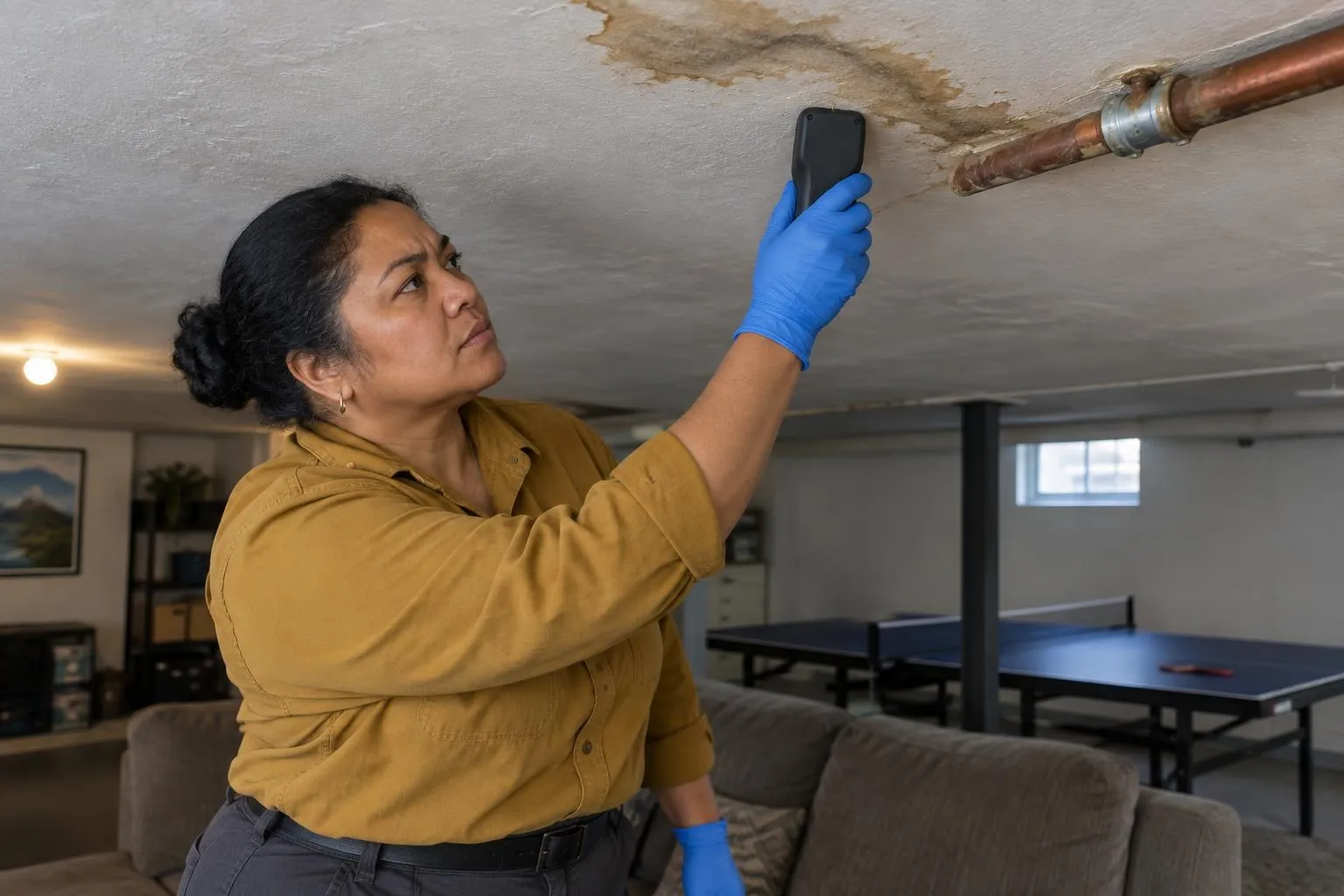
Your inspector carries specialized equipment during this walkthrough: moisture meters (which measure water content in materials), thermal imaging cameras (which detect cold spots where condensation forms), and borescopes (tiny cameras that peer into wall cavities without cutting them open).
Reality Check:If an inspector tells you they found mold just by looking, without any samples sent to a lab, you’re not getting a real diagnosis. Visual identification alone is educated guessing. Mold species matter because some are allergenic, some are pathogenic, and some are totally harmless. Only a lab can tell the difference.
The Sampling Protocol
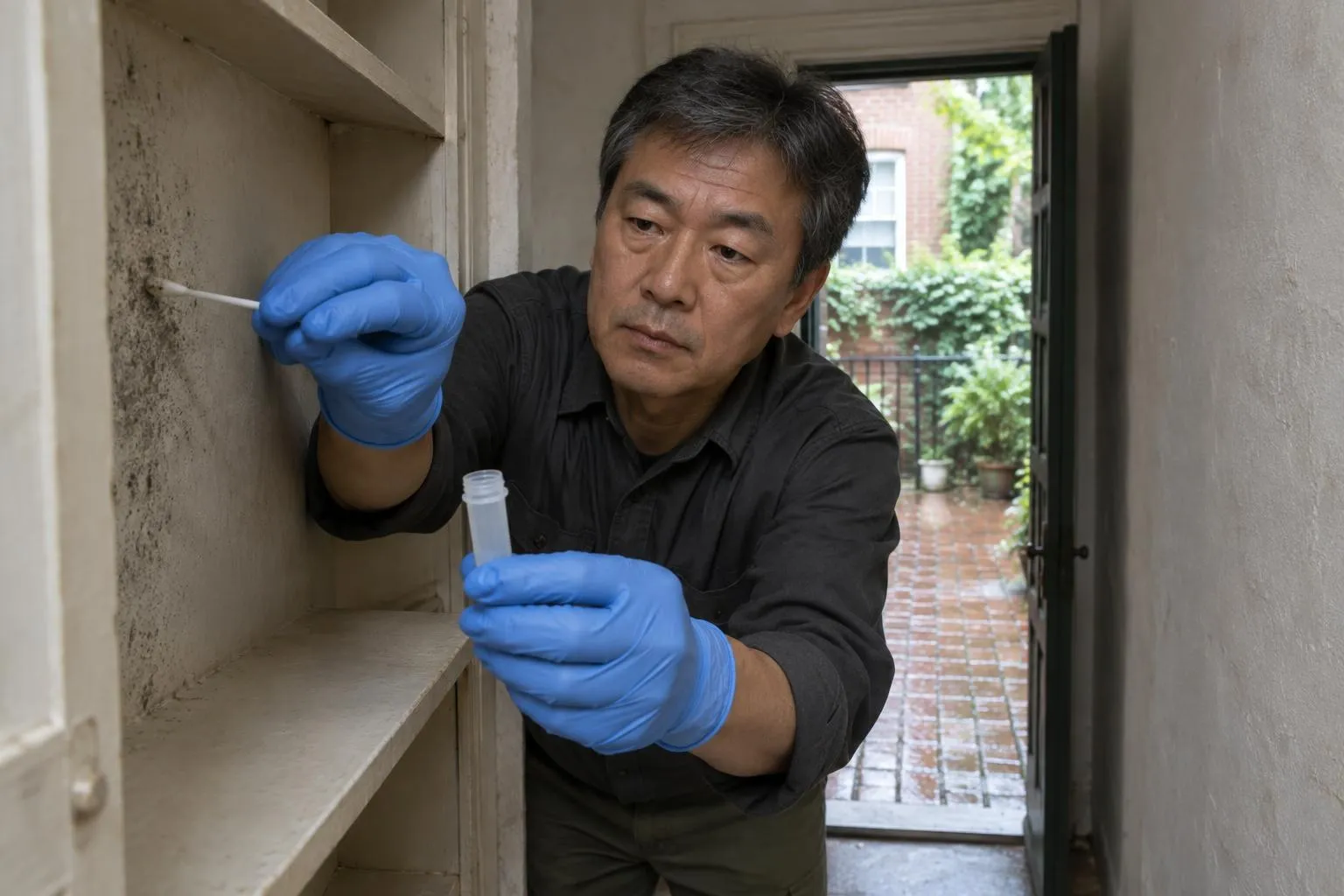
If the visual exam reveals moisture intrusion, water damage, musty odors, or visible growth, IAC2 standards require at least one swab sample. Your inspector collects these using sterile swabs without disturbing the mold — the goal is to capture a representative sample, not agitate spores into the air.
They might also collect air samples if you or occupants have persistent respiratory symptoms. These go into sterile canisters and get sent to a third-party certified lab. The lab analysis identifies:
- Mold species (Stachybotrys, Aspergillus, Penicillium, etc.)
- Spore concentration (how much is in the air)
- Comparison to outdoor baseline (is indoor air quality worse than outside?)
The entire sample-collection process takes 10-20 minutes. The lab analysis takes 5-10 business days.
Pro Tip:Don’t watch your inspector collect samples. Stay in a different room. If they’re not wearing protective gear and taking precautions, that’s a red flag.
The Report & Recommendations
This is where you finally get answers. A credible mold inspection report includes:
- Detailed findings — what was observed, where, and how extensive
- Lab results — species identification, spore counts, air quality comparison
- Likely cause — is this from a roof leak, poor ventilation, plumbing issue, or chronic moisture?
- Remediation recommendations — what needs to happen to fix it
- Prevention guidance — how to avoid this problem in the future
What a good report doesn’t include: cost estimates for remediation, structural assessments, or opinions on unrelated home defects. Your inspector’s job is diagnosis, not sales.
Common Challenges Inspectors Face (And How They Solve Them)
| Challenge | Why It’s Hard | The Solution |
|---|---|---|
| Hidden mold | Mold grows behind walls, above ceilings, inside HVAC ducts | Thermal imaging detects temperature anomalies; borescopes peer into cavities; moisture mapping shows where condensation forms |
| Misidentification | Black spots could be mold, staining, mineral deposits, or soot | Labs provide definitive species ID through culture analysis |
| Airborne spread | Disturbing mold releases spores that contaminate other areas | Protective gear, non-invasive sampling techniques, controlled environments |
| Inaccurate baseline | Wrong pre-inspection prep skews air quality results | Strict 48-hour prep protocol: windows closed, HVAC off, no cleaning |
| Unqualified providers | No national standard; anyone can claim expertise | Verify state licensing, CMI/ACAC credentials, client references |
What Credentials Actually Mean
- CMI (Certified Mold Inspector) via IAQA or EAA — Has documented training, passed an exam, agrees to code of ethics, maintains continuing education
- State License — Required in Florida, Louisiana, and a few other states; proves basic competency and legal standing
- No national EPA certification exists — Don’t let anyone claim otherwise
Check your inspector’s credentials before booking. Call your state’s licensing board. Read reviews on sites where contractors can’t delete negative feedback.
Practical Bottom Line
Here’s what you do right now:
-
If you suspect mold, hire a credentialed inspector (verify CMI or state license) before calling remediation contractors. Separation of diagnosis from sales keeps your information objective.
-
Prepare your home correctly — close windows, turn off HVAC, don’t touch suspected areas for 48 hours before the appointment.
-
Get a detailed report with lab results and specific recommendations, not just “you need remediation.” If they’re also selling you the fix, you’ve got a conflict of interest.
-
Budget for the inspection itself (regional variation) plus lab analysis costs (usually $200-500 depending on sample count). This is diagnostic spending, not remediation spending — and it’s the cheapest insurance you’ll buy.
Your inspector’s job is to give you the information you need to make an informed decision. If they’re vague, selling aggressively, or skipping the lab work, you’re talking to a salesman, not a professional.
For more on navigating the full mold remediation process after you get your inspection report, read The Complete Guide to Mold Inspectors.
Done reading? Get quotes from mold inspectors near you.
Takes about a minute. Free, no obligation; providers reply to you directly.
Popular cities:
Nick built this directory to help homeowners find credentialed mold inspectors without wading through contractors who mostly want to sell remediation — a conflict of interest he ran into when trying to assess his own home after a plumbing leak.