

Office location not published
Service area: “My New Kentucky Home Inspections is committed to serving Louisville with mold inspection services.”
Published service area ↗Compare curated mold inspectors, check certifications, read reviews, and request quotes — all in one place.
Map shows providers with a known office location. All providers are listed below.
No providers match this filter.
Providers with an office in the Louisville area, matched by the ZIP code of their published address.
Based outside the Louisville area, with Louisville named in the service area on their own website.
Office location not published
Service area: “My New Kentucky Home Inspections is committed to serving Louisville with mold inspection services.”
Published service area ↗Also in Kentucky: Western KY area (1)
Need help choosing? Get matched with top providers in seconds.
0 providers selected
Are you a mold inspector in Louisville? Already listed here: Bear Restoration, Clean Air Plus, Environmental Safety Technologies, Inc. and 3 more.
List your businessView curated providers, check certifications, and read real client reviews.
Select up to 5 providers and send your project details. Free, no obligation.
Compare quotes, check availability, and book directly with the provider.
Finding a qualified mold inspector in Louisville is harder than it should be. You’ve got a wet basement, a suspicious smell in the HVAC, or you’re three weeks out from closing on a house — and suddenly you’re trying to figure out who’s actually certified versus who’s just got a truck and a moisture meter. This directory cuts through that. We’ve mapped out what separates the professionals from the ones charging $300 to tell you “yeah, that looks moldy.”
Look for active credentials, not just licenses. Kentucky doesn’t mandate mold inspector certification the way some states do, which means anyone can technically hang a shingle. That’s the problem. Insist on CMI (Certified Mold Inspector) or ACAC credentials — CMC, CMRS, or CIEC. These require documented training, ongoing education, and real accountability. If someone can’t produce a current certificate number within 30 seconds, move on.
Ask about their sampling protocol. A solid inspection includes visual assessment, moisture mapping (thermal imaging or moisture meters), and air or surface samples sent to an independent third-party lab. Cheap operators skip the lab work. Don’t let them. Those samples are the difference between “you’ve got a problem” and “here’s exactly what species, how much, and what caused it.” That data is what your remediation contractor — and your insurance company — actually needs.
Verify they have liability insurance and don’t do remediation. This is critical. If the same company finds the mold and sells you the fix, their incentive is to find as much mold as possible. You need an inspector who’s financially independent from the remediation side. Check their E&O (errors and omissions) policy — it proves they’re bonded and that someone’s backing their work.
Ask about local Louisville water issues. This market has specific vulnerabilities: older brick and limestone foundations are common in neighborhoods like the Highlands and Old Louisville, and they’re prone to hydrostatic pressure problems. Good inspectors know this. Ask if they’ve worked properties in your neighborhood and what patterns they see. That local knowledge is worth paying for.
Pro Tip: Get at least two quotes. A serious inspector will spend 2-4 hours on-site for a residential home and will give you a detailed scope before you book. If someone quotes you over the phone without seeing the property, that’s a red flag.
Most residential mold inspections in Louisville run $200–$800 depending on square footage, access issues, and whether you’re adding air quality sampling. A standard inspection — visual assessment plus moisture mapping — takes 2–4 hours. Lab results come back in 3–7 business days. The full report should include photos, a layout map showing affected areas, species identification, moisture readings, and explicit remediation recommendations tied to industry standards (IICRC, EPA guidelines).
Reality Check: Cheaper isn’t better here. A $150 inspection is almost always incomplete. A $1,200 inspection might be overspecialized for your situation. The $400–600 range for a thorough residential job with lab sampling is the market standard for Louisville.
Louisville’s building stock tilts older — median home age is well above the national average — which means pre-1980s construction, outdated HVAC systems, and foundation vulnerabilities are the norm. Flooding and water intrusion events are also seasonal concerns, especially in lower-lying neighborhoods near the Ohio River and in areas with aging storm drains. That means mold inspectors here spend a lot of time chasing moisture sources that aren’t immediately obvious. Inspectors familiar with Louisville’s specific climate, soil conditions, and building codes are worth the ask.
Mold Inspector services in Louisville typically run $200-800 per inspection, depending on scope, complexity, and turnaround requirements. Expedited work and specialized equipment add cost.
Look for CMI — it's the credential that separates qualified mold inspectors from the rest. Also verify insurance, check reviews, and confirm they can handle your project's specific requirements.
There are currently 6 mold inspectors listed in Louisville, KY on MoldRegistry.
Sponsored providers pay for more prominent placement on pages where they already qualify to appear. Payment does not change a provider's location, credentials or reviews, and it is not an endorsement. All providers on MoldRegistry — sponsored or not — are real businesses.
Find certified, independent mold inspectors: what to expect, how much to pay ($300–$700), and red flags to avoid before hiring.
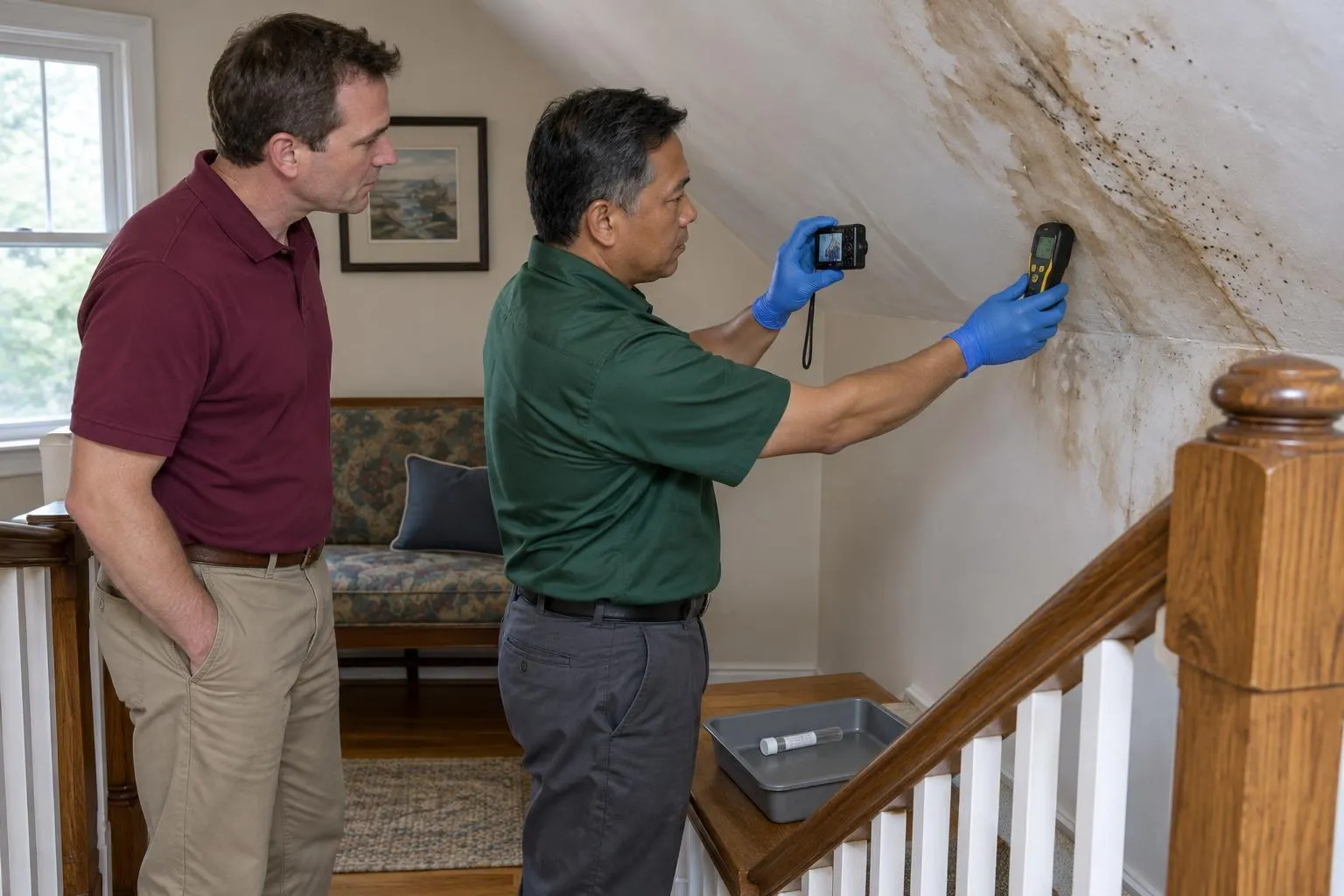
Your mold inspector's report needs visual proof, moisture readings, and lab results—here's exactly what to demand on a quality checklist.
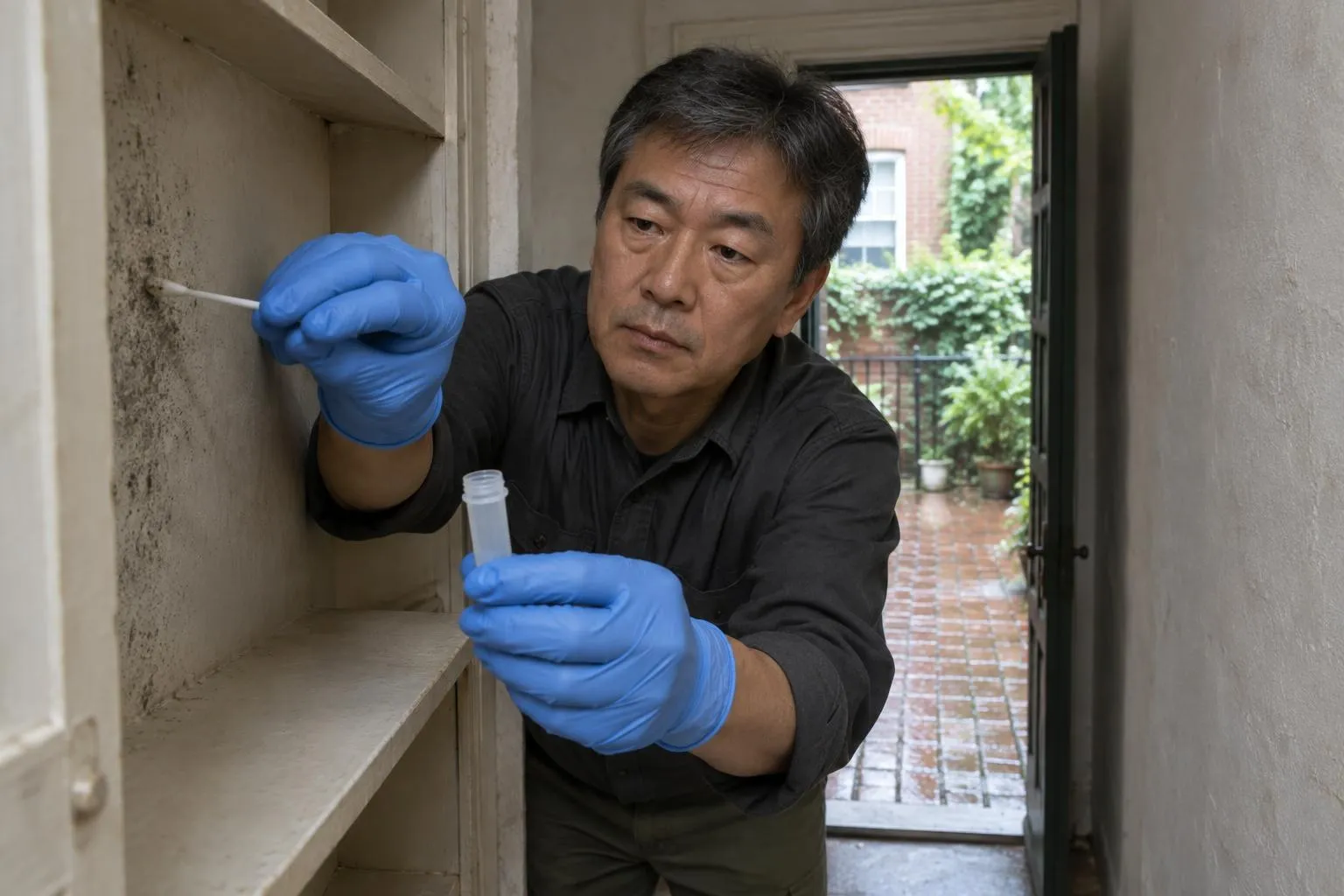
Mold inspector costs range from $150–$3,000+ depending on your state and home size. See what you'll actually pay by location.
Looking for more? Browse our full resource library or find mold inspectors in other cities.