Mold inspectors listed in Los Angeles
See all 12 in Los Angeles →- 1MICRO-certified
24H Mold Inspection of Michigan provides mold inspections, mold testing, moisture detection, and environmental risk assessments for residential and commercial properties in Michigan. The company is inspection-only and uses state-certified laboratory analysis; its parent company states it has provided certified inspection and lab testing since 2006.
- 2Los Angeles
ACC Environmental Consultants, Inc. is a 100% employee-owned, multi-practice environmental consulting firm established in 1986. It provides mold testing and related environmental consulting services to clients in California, Oregon, and Washington.
- 3Glendale
Citadel EHS provides environmental, health, safety, and sustainability consulting services for real estate and business. Its moisture intrusion and microbial consulting practice addresses mold and water damage, and it also provides industrial hygiene and hazardous-materials services. Citadel EHS has provided services since 1993.
- 4Santa Monica
- 5Certified Lead Inspector/Assessor · Certified Asbestos Consultant
Environmental Inspection Services provides indoor-air-quality and environmental inspections for homes, apartments, and commercial buildings. It addresses mold and moisture issues, creates cleanup plans when remediation is needed, and performs post-remediation verification. Founder and President Murray Harreschou has 25 years of experience as a home inspector.
Get free quotes from mold inspection in Los Angeles
Takes about a minute. Free, no obligation; providers reply to you directly.
I watched a friend spend $8,000 on mold remediation after a water leak, only to find out—six months later—that the inspector who flagged the problem was also selling the remediation work. The “extensive contamination” he’d warned about? Gone after a $300 HVAC cleaning. Turns out, conflicts of interest are rampant in the mold inspection world, and Los Angeles is ground zero.
The reason I’m telling you this: Los Angeles County fields over 10,000 mold-related complaints annually, and a 15% spike in residential inspections hit between 2023 and 2025 thanks to post-wildfire humidity spikes. That volume attracts both legitimately credentialed professionals and people who see mold as a ticket to a five-figure remediation job. Knowing which is which will save you thousands.
The Short Version
Hire an independent, ACAC-certified mold inspector with no remediation ties—expect $350–$650 for a standard visual + air sampling inspection. Firms like MI&T LA (4.9/5 stars, $450 base rate) and Fun Guy Inspections (98% satisfaction, $399 start) are the templates. Avoid anyone pushing immediate remediation without a third-party lab report. Post-wildfire LA means higher humidity and more Stachybotrys cases—use inspectors trained in IAQA protocols for legal defensibility.
Key Takeaways
- Los Angeles sees 10,000+ mold complaints annually; humidity spikes post-wildfire have driven inspection demand up 15% since 2023.
- Pricing ranges $350–$650 for standard inspections; full testing (air, surface, moisture mapping) runs $500–$1,200. Markets up 8% from 2024.
- Biased inspectors pushing remediation are a plague—60% of consumer complaints stem from conflict of interest. Look for independent firms with zero remediation services.
- ACAC (Certified Mold Inspector) and IAQA certifications matter. Post-wildfire Stachybotrys cases are up 20%; certified inspectors catch what generalists miss.
Why Los Angeles is Different (and More Expensive)
Mold isn’t generic, and neither is the mold problem in LA.
The city sits at 65% average humidity, higher than inland Southern California counties like Riverside and San Bernardino—which run 10–15% cheaper for the same service. But coastal humidity isn’t the only factor. Post-2024 wildfires created a secondary problem: moisture infiltration during cleanup and rebuilding, plus the displacement of salt-laden air inland. Fun Guy Inspections reports a 20% uptick in Stachybotrys cases (the “toxic black mold” you’ve probably heard about) since late 2024. This species requires a different sampling protocol and expertise.
LA’s regulatory environment also raises baseline costs. California Title 8 mandates employer notification for workplace mold over 100 sq ft; LA’s Department of Building and Safety (LADBS) requires permits for remediation over 10 sq ft. Dual licensing (assessment + remediation in one firm) is prohibited in Orange County and heavily scrutinized in LA through ACHM certification. Legitimate inspectors build compliance costs into their quotes. That’s not markup—that’s protection.
Bottom line: You’re not just paying for a visual sweep. You’re paying for someone who understands LA’s post-wildfire humidity profile, knows the regulatory maze, and isn’t incentivized to oversell.
What to Expect in Cost and Service
The 2026 Los Angeles mold inspection market has standardized around these tiers:
| Service Level | Price Range | What’s Included | Best For |
|---|---|---|---|
| Basic Visual Inspection | $350–$450 | Visual survey only, moisture meter, no air samples | Pre-purchase walkthrough, quick assessment |
| Standard (Visual + Air Sampling) | $500–$650 | Visual + 2–3 air samples, lab analysis via NIOSH 7400 method | Post-leak confirmation, health concerns |
| Full Testing Package | $800–$1,200 | Air, surface swabs, thermal imaging, moisture mapping, CIRS protocol for chronic cases | Pre-purchase deep dive, health symptoms present |
| Post-Remediation Clearance | $300–$500 | Verification testing to confirm <10,000 spores/m³ viable mold | After remediation work completion |
Pricing is up 8% from 2024 due to inflation and sustained demand. Hourly consulting (for complex cases or legal defense) runs $150–$250/hour.
Reality Check:If an inspector quotes under $300 or bundles in remediation at a discount, walk. That’s usually the wedge that turns into an unnecessary $10K bill.
The Independence Problem (And Why It Matters)
Here’s what most people miss: the mold inspection industry has a structural conflict of interest.
About 60% of consumer complaints stem from biased inspectors—folks who own both the testing and remediation side of the business. The math is obvious: a $450 inspection that leads to a $12,000 remediation job pays infinitely better than a $450 inspection that finds no problem. So guess what inspectors often find?
MI&T Los Angeles deliberately solves this by running zero remediation services. Their 4.9/5 rating across 1,200+ reviews reflects clients who trust they’re getting honest answers. Their lead rep noted that 70% of mold calls in LA are moisture-driven, not active mold—and many don’t require remediation at all, just HVAC cleaning or dehumidifier placement. You’ll never hear that from someone with a remediation contract.
Fun Guy Inspections uses a similar model—ACAC and IAQA certified, 98% claimed client satisfaction. They led the post-2024 wildfire inspections in LA County and documented the Stachybotrys spike that made headlines.
Pro Tip: Ask point-blank: “Do you own or operate any remediation services?” If the answer is yes, ask for an independent lab report verification clause in writing. Better yet, find someone who says no.
How to Hire the Right Inspector
Step 1: Verify credentials. ACAC Certified Mold Inspector (CMI) is the baseline. IAQA certifications add credibility, especially in post-wildfire cases. CIRS (Certified Indoor Residential Specialist) protocol matters if anyone in your home has respiratory symptoms.
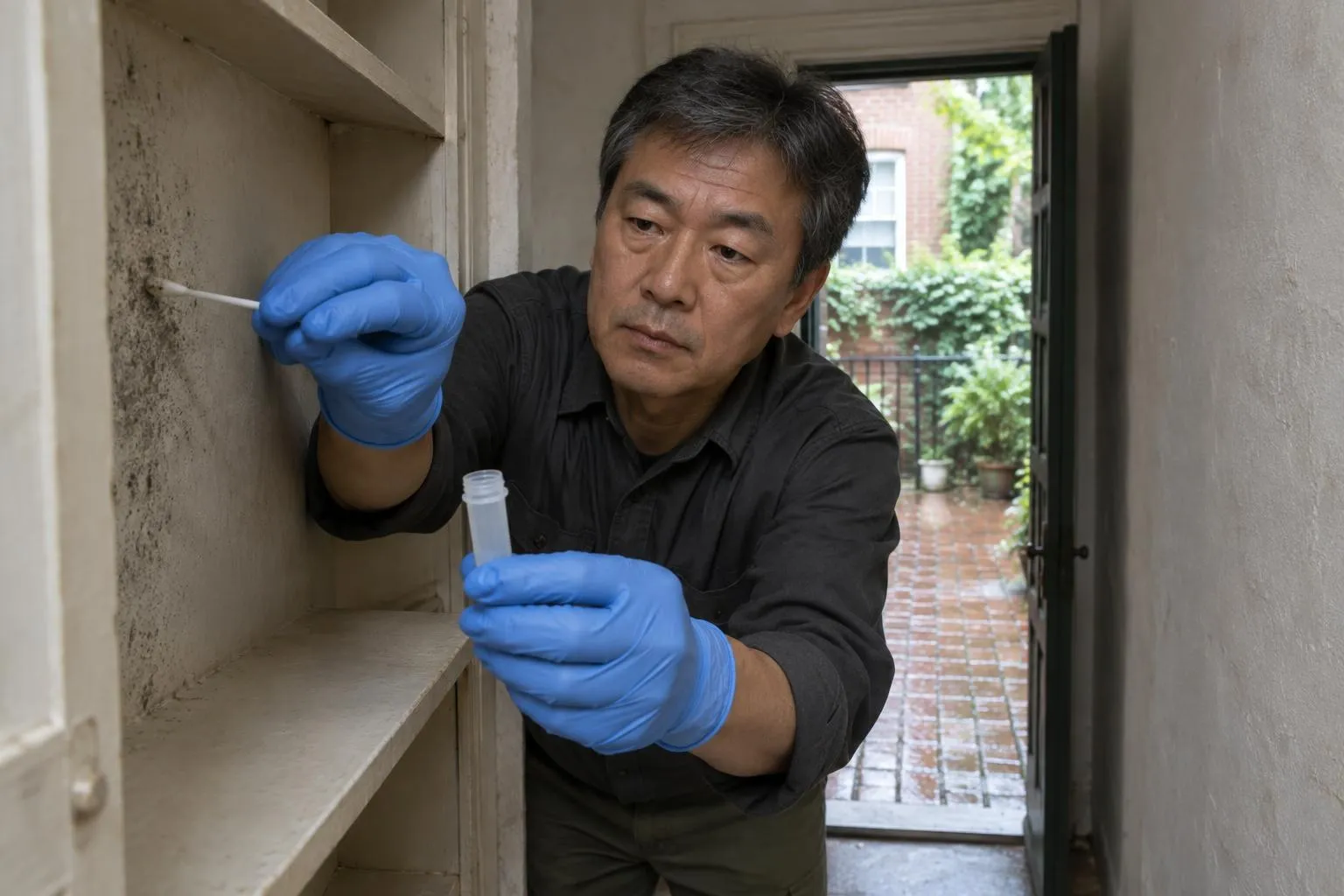
Step 2: Ask about the sampling method. You want NIOSH 7400 air sampling with AIHA EMLAP lab accreditation. Surface swabs via tape-lift or bulk sampling should identify species, not just give you a spore count.
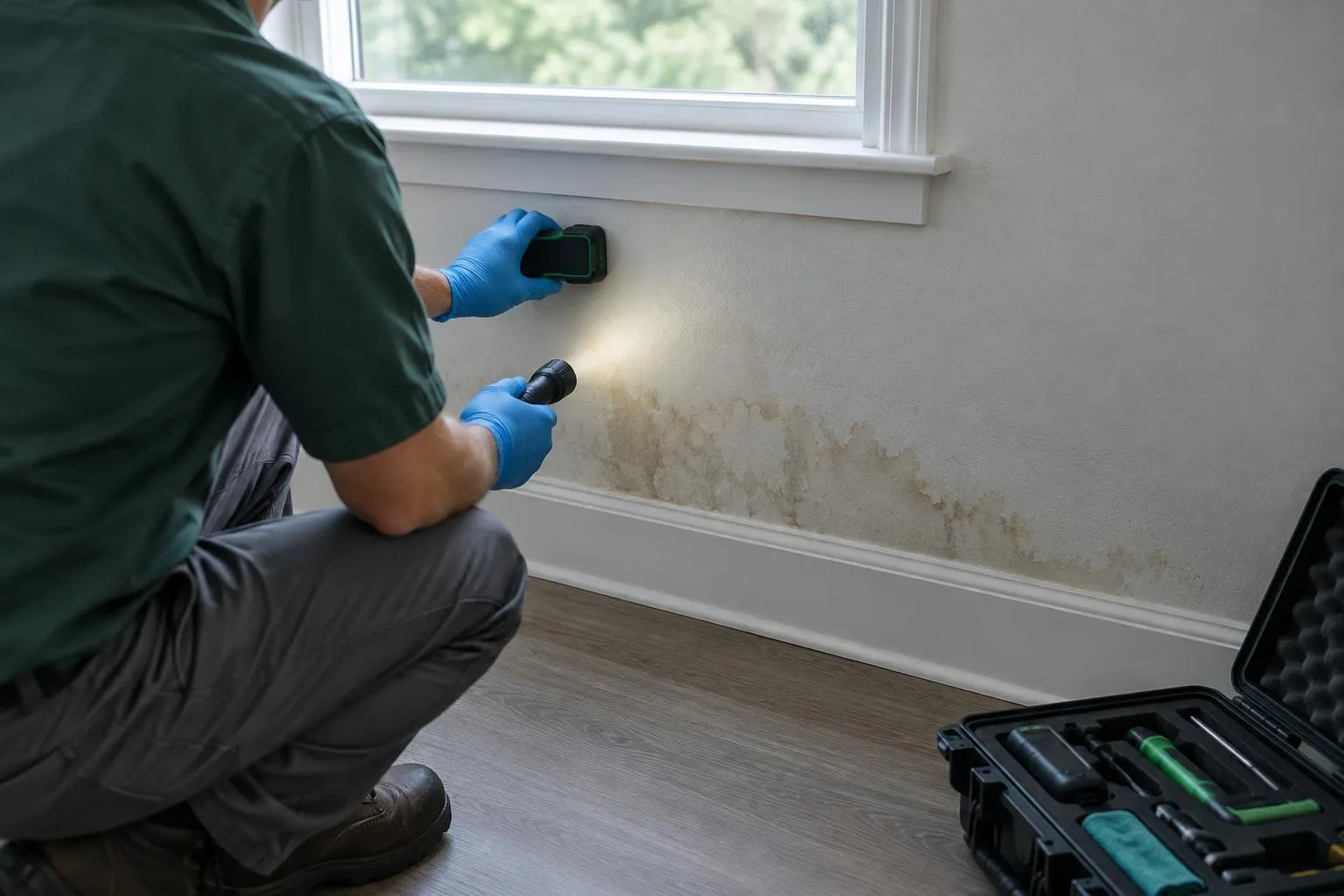
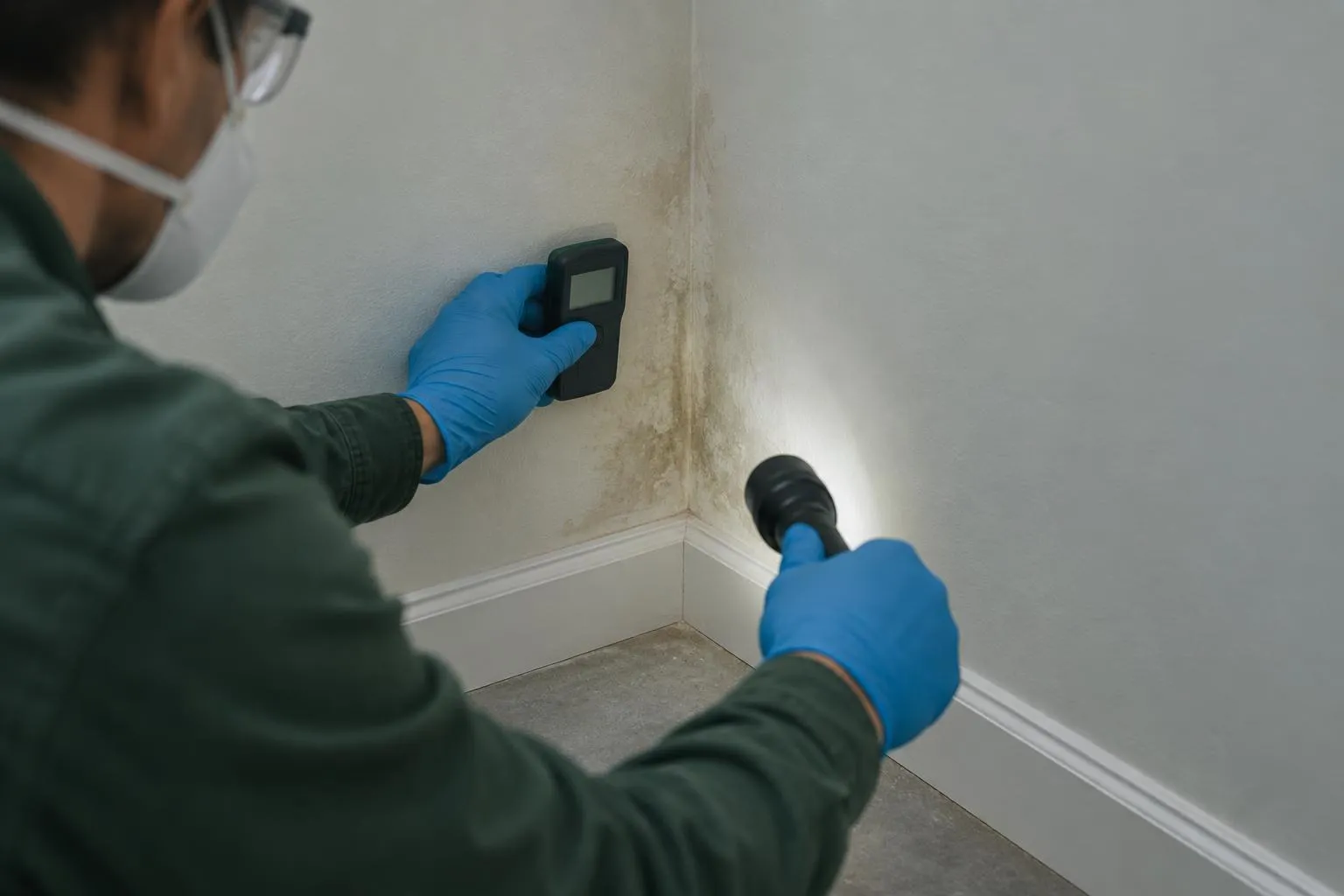
Step 3: Demand moisture mapping. Thermal imaging (infrared camera) catches hidden moisture in walls and attics. If an inspector doesn’t mention this, they’re doing surface-level work.
Step 4: Get a fixed-price quote in writing. No surprises on lab costs or add-ons. Bundled packages (air + surface + thermal) from firms like Mold Sciences run $800–$1,200 and prevent nickel-and-diming.
Step 5: Confirm the post-remediation protocol. If you end up needing remediation, the inspector should verify clearance using ERMI scoring (Environmental Relative Moldiness Index) or confirm spore counts below 10,000 spores/m³ viable mold. California regs mandate HEPA vacuums and containment during remediation—your inspector should understand this cold.
Reality Check:A real example: In 2025, MI&T LA identified Stachybotrys in an Echo Park client’s HVAC system via air sampling. The client initially panicked—until MI&T clarified it was isolated to ductwork, not occupant exposure. A targeted $3,000 HVAC replacement and re-test cleared the home. Total cost: $450 (inspection) + $3,000 (remediation) + $400 (clearance testing) = $3,850. The alternative (full remediation quote from a biased firm): $15,000+.
LA-Specific Red Flags and Certifications
Post-wildfire LA means specific knowledge matters. Stachybotrys, Aspergillus, and Penicillium are the Big Three in humid, fire-recovery zones. A credible inspector should:
- Know the difference between viable (living) and non-viable spores in air samples
- Use multi-sample protocols (3–5 air samples minimum) to avoid false positives from settling spores
- Understand CIRS (Chronic Inflammatory Response Syndrome) symptom patterns if health claims are involved
- Be fluent in LA’s LADBS remediation permits and Title 8 workplace compliance
Check For Mold inspected 50 homes in flood-recovery zones in Riverside County (LA’s inland neighbor) in 2025. Forty percent tested positive for Aspergillus; their standard service averaged $600. That’s baseline expertise you want.
Practical Bottom Line
If you’re buying a home in Los Angeles, renovating after water damage, or your household has unexplained respiratory issues, you need an inspection. Here’s what to do:
- Call 2–3 independent firms (no remediation ties). Get fixed quotes in writing.
- Verify ACAC and IAQA credentials on their website. Don’t assume.
- Ask for NIOSH 7400 sampling and third-party lab analysis. If they won’t commit, move on.
- Request thermal imaging as part of the package. It’s worth the $50–$100 upcharge.
- Budget $500–$800 for peace of mind. It’s 0.5% of a home purchase and worth every dollar if it saves you from an $8,000 remediation blunder.
Start with the directory at /los-angeles/ to find certified inspectors in your neighborhood. For deeper context on how mold inspections work nationally, see the /blog/complete-guide-mold-inspectors/ hub article.
The friend I mentioned at the start? After his $8,000 mistake, he spent $450 on a re-inspection with an independent firm and confirmed the remediation was unnecessary. He wishes he’d started there.
Don’t be him.
Done reading? Get quotes from mold inspectors in Los Angeles.
Takes about a minute. Free, no obligation; providers reply to you directly.
Popular cities:
Nick built this directory to help homeowners find credentialed mold inspectors without wading through contractors who mostly want to sell remediation — a conflict of interest he ran into when trying to assess his own home after a plumbing leak.